
They remember your face
Field studies show crows recognise individual human faces, remember people who treated them well or badly, and teach other crows who to trust.
About Happy Paws
Happy Paws was founded in Toronto by veterinarians, wildlife rehabilitators and neighbours who refused to look away. We believe every animal is a thinking, feeling individual — and that protecting them is how we protect the living systems all of us depend on.

Why rescue matters
Wildlife populations worldwide have fallen by an average of 73% in fifty years. In a city like Toronto, habitat loss, traffic, window strikes, pollution and abandonment put thousands of animals in crisis every year.
Rescue is not only an act of compassion. Every hawk returned to the sky, every raccoon family reunited, every abandoned dog placed in a loving home keeps a thread of the ecosystem intact — and reminds a city of what it means to care.
Living Planet Index (1970 = 100%). Hover to read values.
| Year | Index (1970 = 100%) |
|---|---|
| 1970 | 100% |
| 1980 | ≈85% |
| 1990 | ≈68% |
| 2000 | ≈52% |
| 2010 | ≈38% |
| 2020 | 27% |
Source: WWF / ZSL, Living Planet Report 2024 (1970 and 2020 values). Intermediate points approximate the published trend.
What we believe
These beliefs shape how we treat animals, how we spend every donated dollar, and how we measure success.
Every animal has its own temperament, history and needs. Care plans are written for one patient at a time.
Our goal for wildlife is always a successful release. We minimise human contact so animals keep the instincts they need to survive.
Recovery is measured by more than survival: comfort, freedom of movement, natural behaviour and freedom from fear.
Veterinary evidence guides every decision; empathy guides how we carry it out. We publish our outcomes so others can learn from them.
Healthy animal populations mean healthier ecosystems, safer cities and stronger communities — in Toronto and around the world.
Remarkable minds
Science keeps revealing the depth of animal intelligence — memory, problem-solving, communication and emotion. The animals we rescue in Toronto are no exception.
Field studies show crows recognise individual human faces, remember people who treated them well or badly, and teach other crows who to trust.
Raccoons open complex latches and puzzle boxes, and research suggests they can remember solutions for years — skills that help them adapt to city life.
Squirrels have been observed making "fake" caches when they know they are being watched — a sign of planning and awareness of others.
Dogs follow our pointing gestures and read our facial expressions, and some have learned the names of more than a thousand objects.
A single owl can take hundreds of rodents a year, providing free, chemical-free pest control for farms, parks and neighbourhoods.
Many animals experience fear, pain, comfort and social bonds. That capacity to feel is the heart of why we rescue.
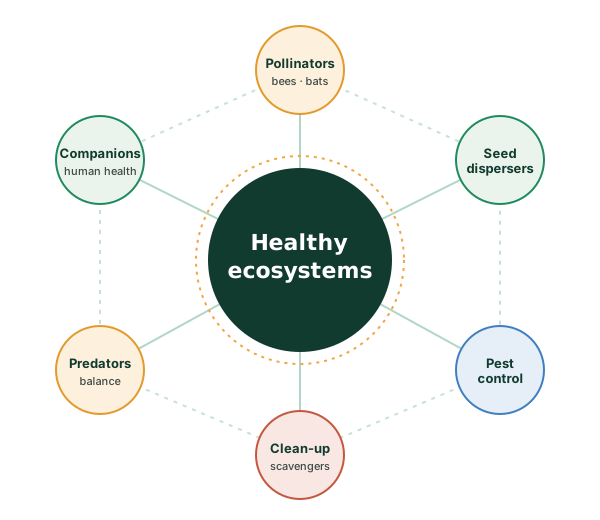
A valuable part of the ecosystem
Animals pollinate our food, plant our forests, control pests, clean up waste and keep populations in balance. Companion animals lower stress and bring communities together.
When a species declines, the effects ripple outward — to plants, to other animals, and eventually to us. That is why Happy Paws treats every rescue as an act of ecosystem preservation, not just individual care.
Partner on conservationWho we care for
Our teams are trained across species, with dedicated protocols for each — because a baby songbird and a senior shepherd need very different kinds of care.
Share of admissions, most recent year
Our story so far
Founded in Toronto by two veterinarians and a group of volunteer rescuers.
Launched our wildlife release programme with licensed rehabilitators.
Built a GTA-wide network of partner clinics and foster homes.
Passed 1,000 rescues and signed our first international partnership.
Launched the campaign for Toronto's first purpose-built rehabilitation campus.
“The greatness of a city can be judged by the way it treats its most vulnerable — and that includes the animals.”
— Happy Paws founding team
Donors, volunteers, foster families and corporate partners make every rescue possible. Find the role that fits you.